Last updated: November 16, 2026
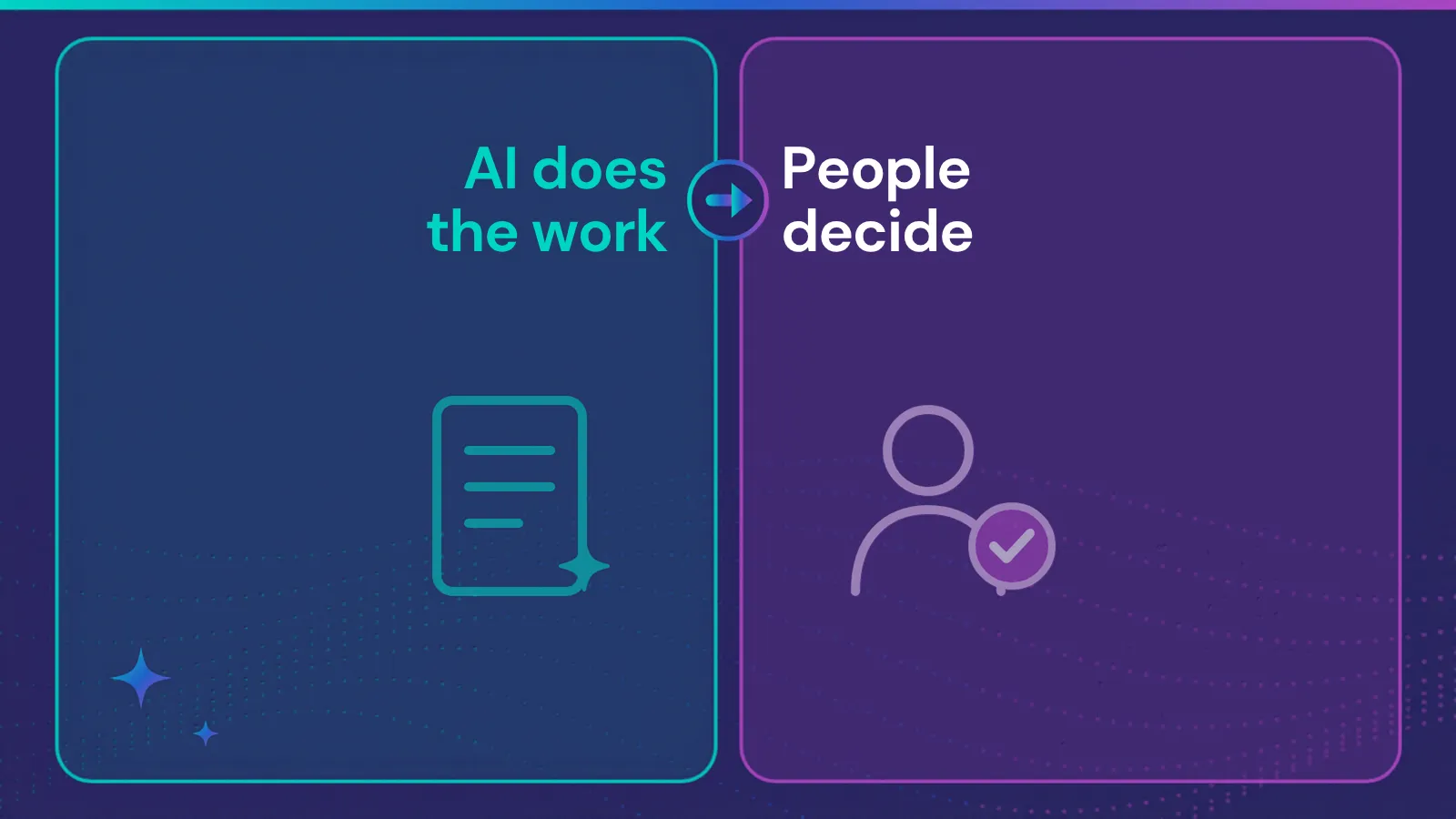
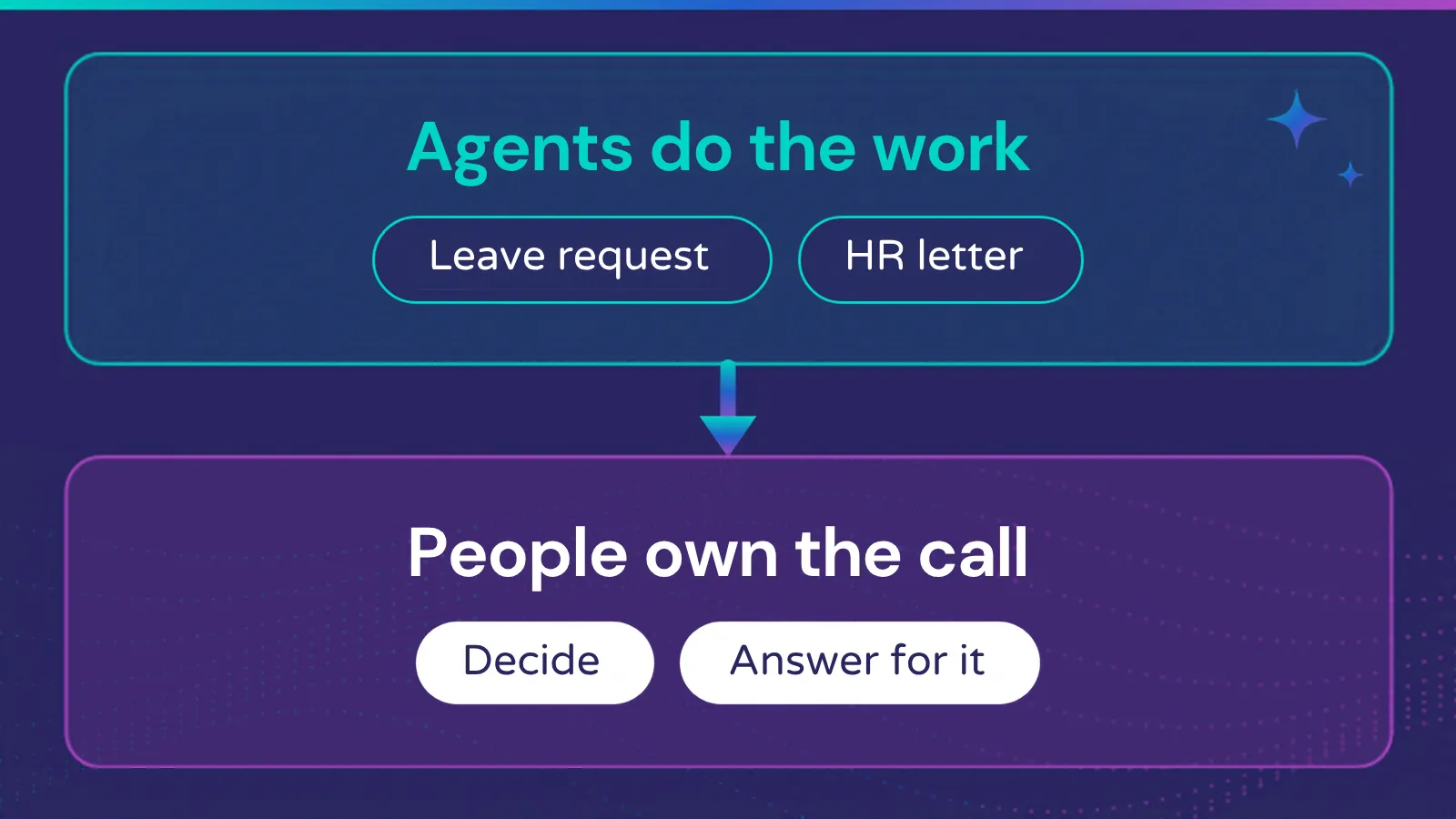
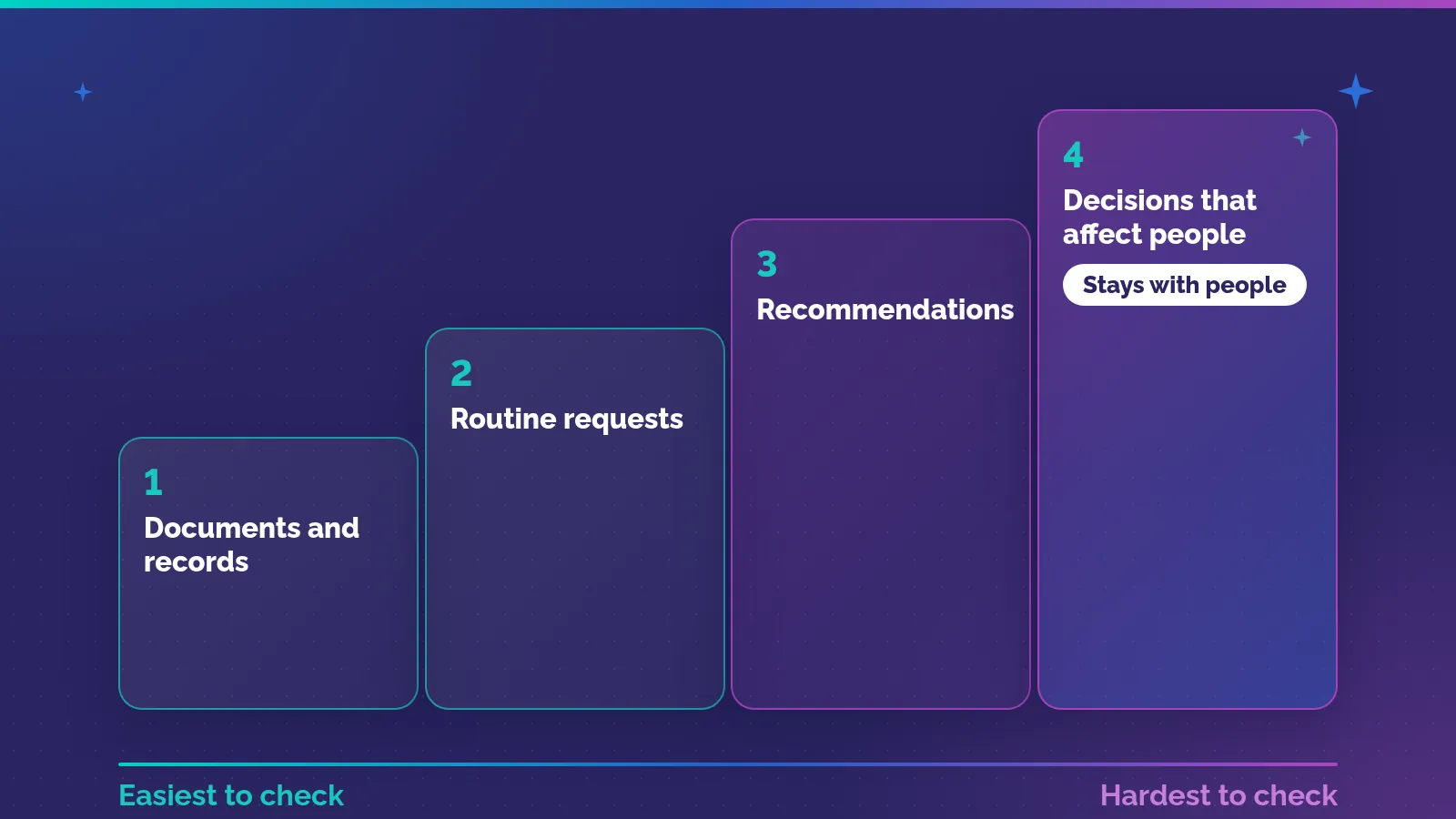
HR automation with AI should start with documents, not decisions. An AI agent finishes a whole task on its own, then a named person checks it. Start with letters, certificates and record updates. Move on to routine requests, then recommendations. Decisions that affect people come last, and some of them stay with people for good.
I’ve worked in enterprise software for more than 20 years. I founded Solvait in 2010, and today it’s an agentic AI HR company. I’ve already written the longer guide on agentic AI in HR in Saudi Arabia: what to give the agents, and what to keep. This post is for HR leaders and CEOs in Saudi Arabia and the Gulf who already buy the idea and are now asking a narrower question: in what order?
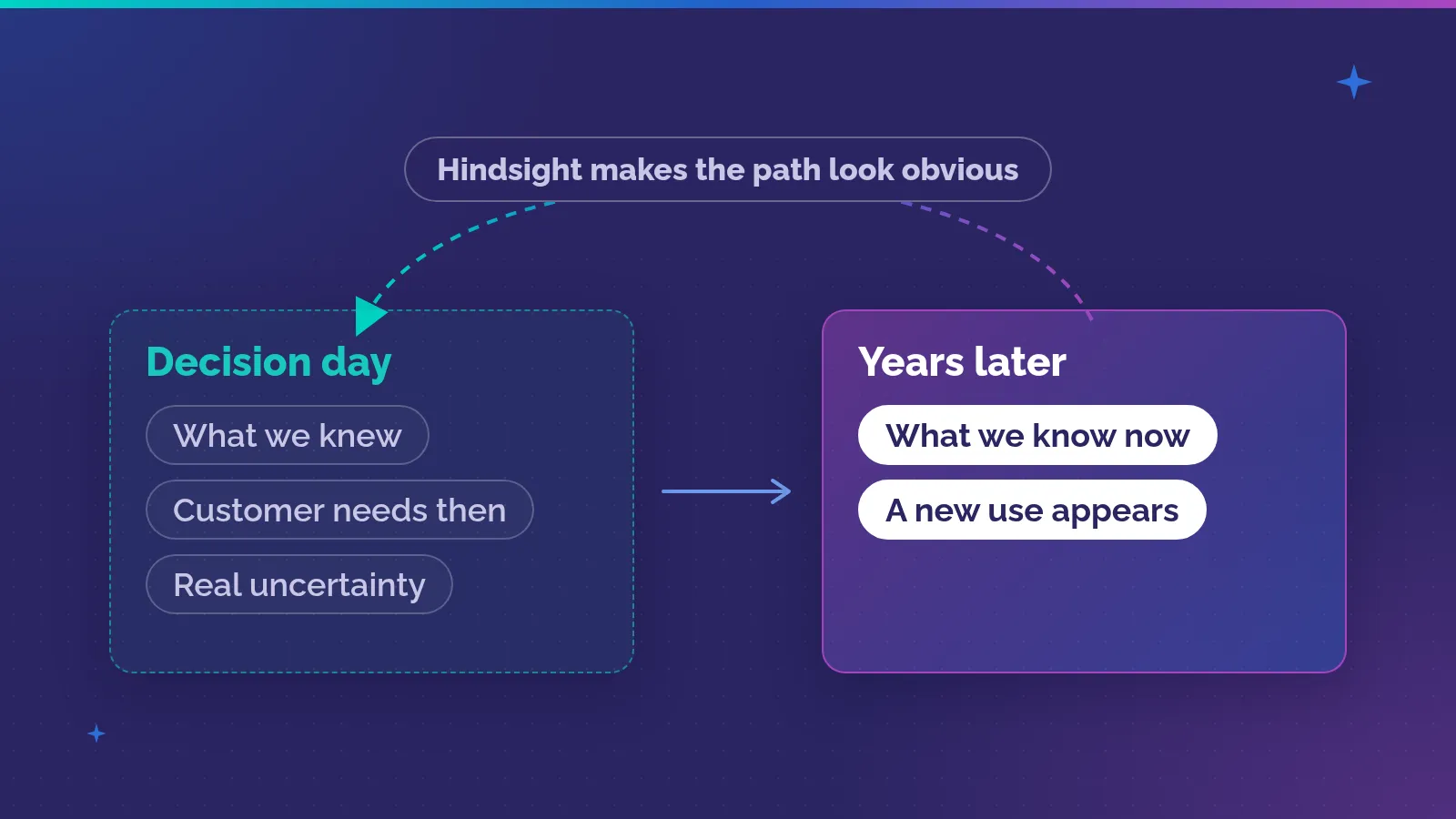
The first work we handed to an AI agent at Solvait wasn’t HR work. It was writing code, and fixing code. And that’s document-like work: the output sits in front of you, and a person can check it and correct it. That’s why I think the same order fits HR.
Why does the order matter so much? Because the same list, started from the wrong end, can cost you the whole project.
What is HR automation with AI?
In this post, HR automation with AI means an agent that finishes the task, not one that only answers a question. That’s the gap between an assistant and an agent. One tells you how to do it. The other does it.
An AI assistant will draft a salary certificate if you ask it to. An agent picks up the employee’s request, pulls their data from the HR system, issues the letter in the right language, sends it for review, and files it. Every step, start to finish, with a person who owns the result. For the deeper picture of what agents should and shouldn’t do in HR, the pillar guide covers it.
Companies are already moving. In McKinsey’s 2025 global survey, 23% of respondents said their organizations are scaling an agentic AI system somewhere in the enterprise, and another 39% said they’ve started experimenting with agents (McKinsey, The state of AI in 2025, p. 5).
HR is near the back of that line. In the same survey, only 3% of respondents outside the AI high performers said they’re scaling agents in HR. Among the high performers it was 14% (p. 17, Exhibit 12).
So most HR teams will start from close to zero. And an agent that can finish a whole task can also get a whole task wrong. That’s exactly why the order matters.
Why start with documents?
Because a mistake there is easy to see and cheap to fix.
A salary certificate with the wrong number on it? The employee spots it before they take it to the bank, and it’s reissued in minutes. An experience certificate with a misspelled name? Same thing. The damage is small, the fix is fast, and anyone on the team can tell whether the work is right.
That’s what you need in the first weeks. Your team watches the agent work every day, checks its output, and finds out for themselves where it’s reliable and where it needs a nudge. Trust gets built one correct letter at a time.
The same goes for updating personal data, flagging iqamas that are about to expire, filing contracts, and answering questions about written policies. Plenty of volume, lots of repetition, and you know what the right answer looks like before you start.
There’s a second reason, and it’s less obvious: the cost of checking. In IBM’s 2026 CHRO study, 80% of executives said AI adoption creates unrecognized work: validating recommendations, correcting errors, adding context and managing exceptions (IBM, Designing the Thinking Organization, p. 34).
Checking a letter takes seconds. Checking a promotion recommendation can take an hour, and you might still miss the error. Start with documents and that extra work stays small while your team is still learning how to review.
What are the four stages, and what happens in each one?
I see four stages. To be clear, this is my own order from experience, not an industry standard. The table sums it up, and the detail follows.
| Stage | What the agent does | What the person does | Example tasks | When to move on |
|---|---|---|---|---|
| 1. Documents and records | Finishes the work and files it | Checks a sample of the results | Salary certificates, experience letters, data updates, contract filing | When you know the error rate from a real sample and the team asks for more |
| 2. Routine requests | Completes the transaction and prepares it for approval | Checks every transaction at first, then a sample | Standard leave, balance questions, interview scheduling, first-pass CV screening | When the check is a formality in most cases and every task has one named owner |
| 3. Recommendations | Gathers the data and prepares the recommendation | Decides, and can reject the recommendation easily | Candidate shortlists, first drafts of performance reviews, payroll exception calculations | When the team trusts the recommendations and knows how to reverse a mistake fast |
| 4. Decisions that affect people | Gathers the facts only | Decides and talks to the employee in person | Promotions, warnings, terminations, disciplinary cases, final hiring decisions | No next stage. Some of these stay with people for good |
Stage one builds the habit. Your team gets used to seeing and checking the agent’s work, and the agent gets used to your data and the way your letters read.
Stage two builds speed. This is where employees feel the difference for the first time, because a leave request that used to take days now closes much faster. First-pass CV screening belongs here, as long as a person checks the result before it’s used.
Stage three builds trust in judgment. The agent prepares and the person decides. The final candidate shortlist stays a recommendation, and a named person makes the call.
Stage four stays with people. The agent can gather the facts and put the file in order. But the person decides, and the person sits down with the employee.
Look at the two middle columns again. The table is really a list of who does what at each stage. Most companies haven’t written that down yet. IBM found that only 26% of organizations clearly define work as human-led, AI-assisted or AI-executed (IBM, p. 17).
If you read the four levels in the pillar guide, you’ll notice this order follows them closely. There the question was: who decides? Here it’s: where do you start? The answer is the same in both cases. Go from the easiest to check to the hardest.
Why do you lose the project if you start with decisions?
Because the first wrong decision about an employee isn’t easily forgotten.
If the agent gets a letter wrong, the team fixes it and gets on with the day. If it gets a recommendation about a person wrong, the team stops trusting it. Sometimes they stop trusting the whole project.
And there’s a second, worse problem. With documents, you can see the mistake. With decisions, the mistake often stays hidden. A shortlist that’s missing someone will never tell you who should’ve been on it.
Value is already hard to show. In PwC’s 2026 CEO Survey, 56% of CEOs said their company has seen neither higher revenues nor lower costs from AI in the last 12 months (PwC, 29th Global CEO Survey, p. 5). I think starting with decisions makes that worse. It puts you where value is hardest to measure and risk is at its highest.
Employees already worry about AI getting things wrong. In McKinsey’s survey of 3,002 US employees, 51% named cybersecurity and 50% named inaccuracy as concerns about gen AI (McKinsey, Superagency in the workplace, p. 21, Exhibit 8). It’s a US survey, but I don’t expect the worry to be very different here. And when the first thing an employee sees from the agent is a decision about them, that worry turns into rejection.
The reverse holds too. IBM found that where judgment is built into work, 62% of CHROs report rising employee confidence in AI-enabled decisions. Where it isn’t, 57% report that confidence declining (IBM, p. 19). The order I’m suggesting is a practical way to build that judgment into the work from day one.
When should you move to the next stage?
When you see four signs, whatever the calendar says.
- The team asks for more. When people tell you “let the agent take this one too”, the trust is there.
- You know the error rate in numbers. From checking a real sample, not from a feeling.
- Every task has one named owner. One person, by name, who answers for the result.
- You can roll back fast. If the agent gets it wrong, you know who stops it and how.
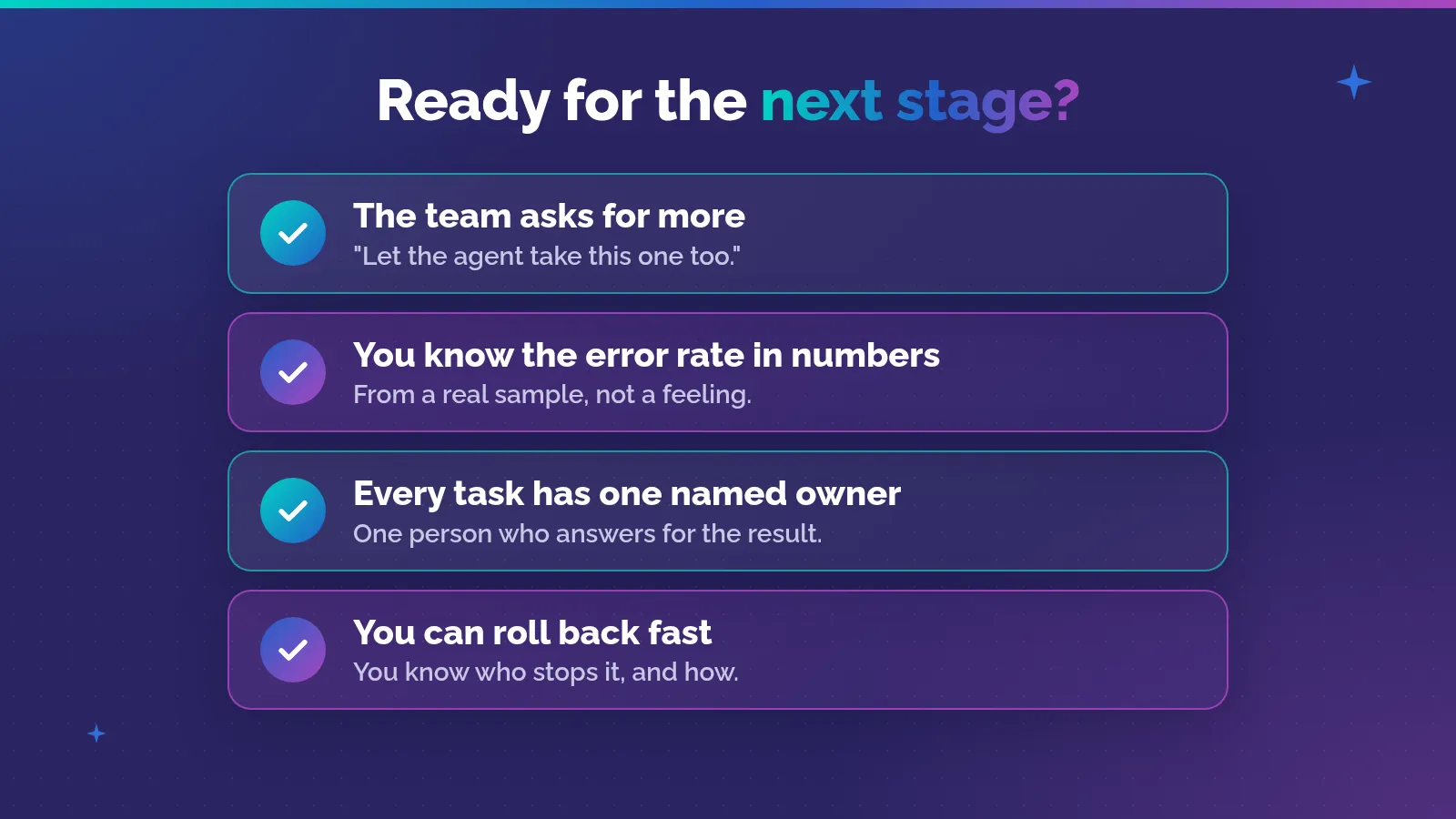
If those four aren’t clear yet, stay where you are for another two weeks. You won’t lose anything.
Why does this matter now in Saudi Arabia?
Because companies here expect more of their work to be automated than the global average.
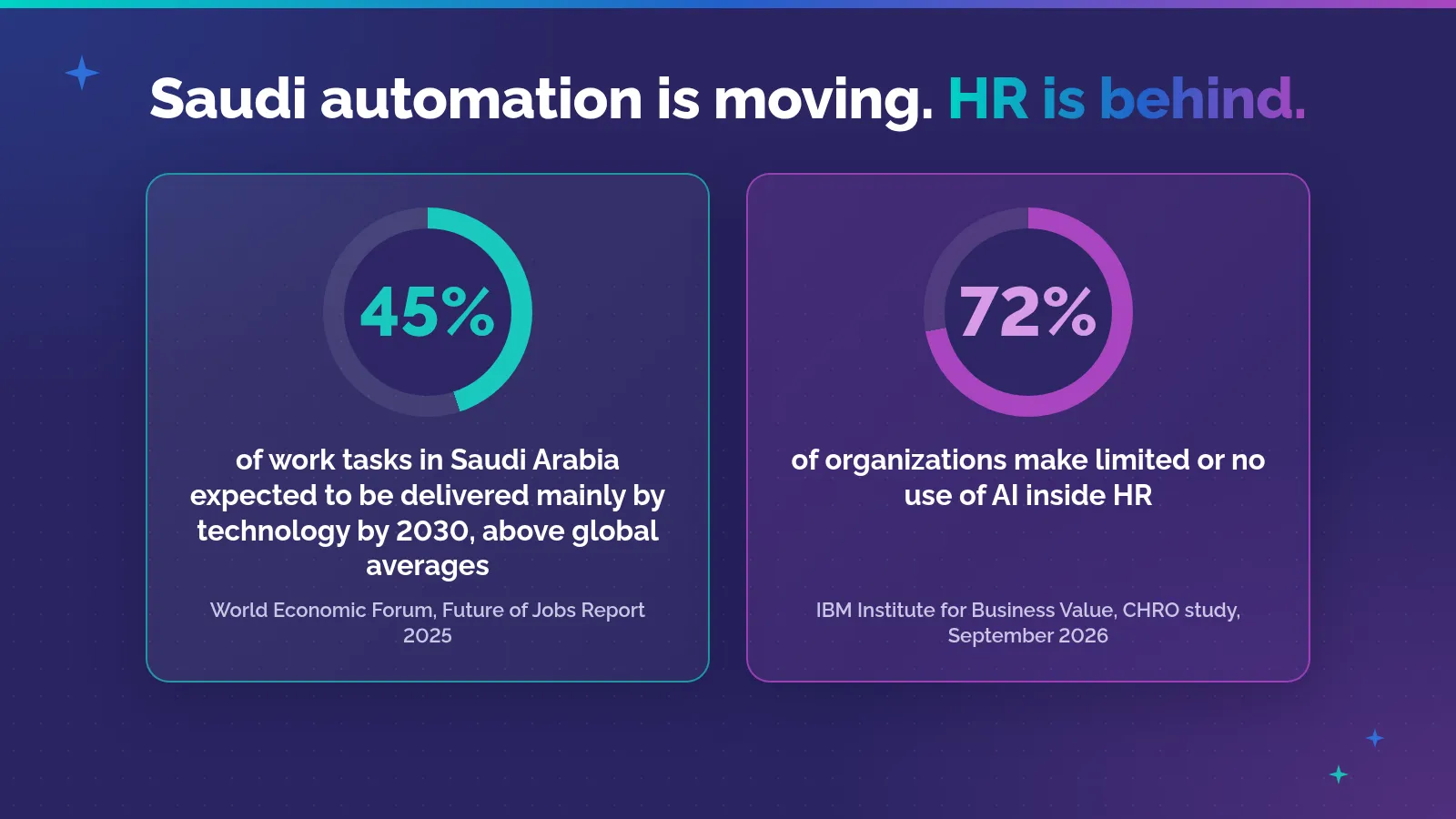
In the World Economic Forum’s Future of Jobs Report 2025, companies operating in Saudi Arabia expect the share of work tasks mainly delivered autonomously by technology to reach 45% by 2030, above global averages. Over 70% of employers there see technological literacy as a skill on the rise (World Economic Forum, Future of Jobs Report 2025, p. 69).
At the same time, HR teams are behind on using these tools inside their own function. IBM’s study found that 72% of organizations make limited or no use of AI inside the HR function itself (IBM, p. 41).
Here’s how IBM breaks that down:
| Where HR stands on AI | Share of organizations |
|---|---|
| No AI use in HR | 16% |
| Using “out of the box” AI features in HR platforms | 26% |
| Pilots in a few HR use cases | 30% |
| Scaled across multiple HR processes | 22% |
| AI-native at scale | 6% |
Together, the first three rows come to 72% (IBM, p. 42, Figure 5). If your team sits in one of them, stage one is where you start, whatever the board expects.
That gap has a practical meaning. A lot of HR teams will be asked to move quickly, with no earlier experience of running agents. That’s exactly when an order protects you, because it stops you jumping to stage four just because the board wants a quick win.
There’s one more local point. In Saudi Arabia, plenty of HR documents are needed in both Arabic and English. That’s a good chance to test the agent in both languages, and to judge the quality of its Arabic in particular, before it goes anywhere near something sensitive.
Isn’t starting with documents slow?
Honestly, yes. A little.
Letters and certificates don’t impress anyone in a board meeting, and nobody puts them in an annual report. That’s the real trade-off: you give up the impressive start in exchange for a base that doesn’t fall apart at the first mistake.
But I think it’s the shorter road to decisions in the end. A team that has trusted the agent across hundreds of small tasks will accept it preparing their big decisions. A team that watched it get the first recommendation wrong will push back on every step after that.
How do you start, step by step?
These are the steps I’d suggest for the first stage, in almost any company:
- Pick one document type. The one you’re asked for most, such as the salary certificate. Just one to begin with.
- Name one owner. A person on the HR team who answers for this work by name, and knows it.
- Decide how you’ll check. At first, check every letter. Once the results are stable, move to a sample, and write down how big it is.
- Log the errors in numbers. How many letters went out, how many had a mistake, and what kind. That number is what you’ll rely on later.
- Add the second document, then the third. Once the first one is stable, widen inside the same stage before you move on.
- Check the four signs before moving on. If they’re all clear, start on routine requests. If they’re not, two more weeks costs less than starting over.
These steps are close to the “start with one workflow” idea in the pillar guide. The difference is that this tells you which workflow to start with.
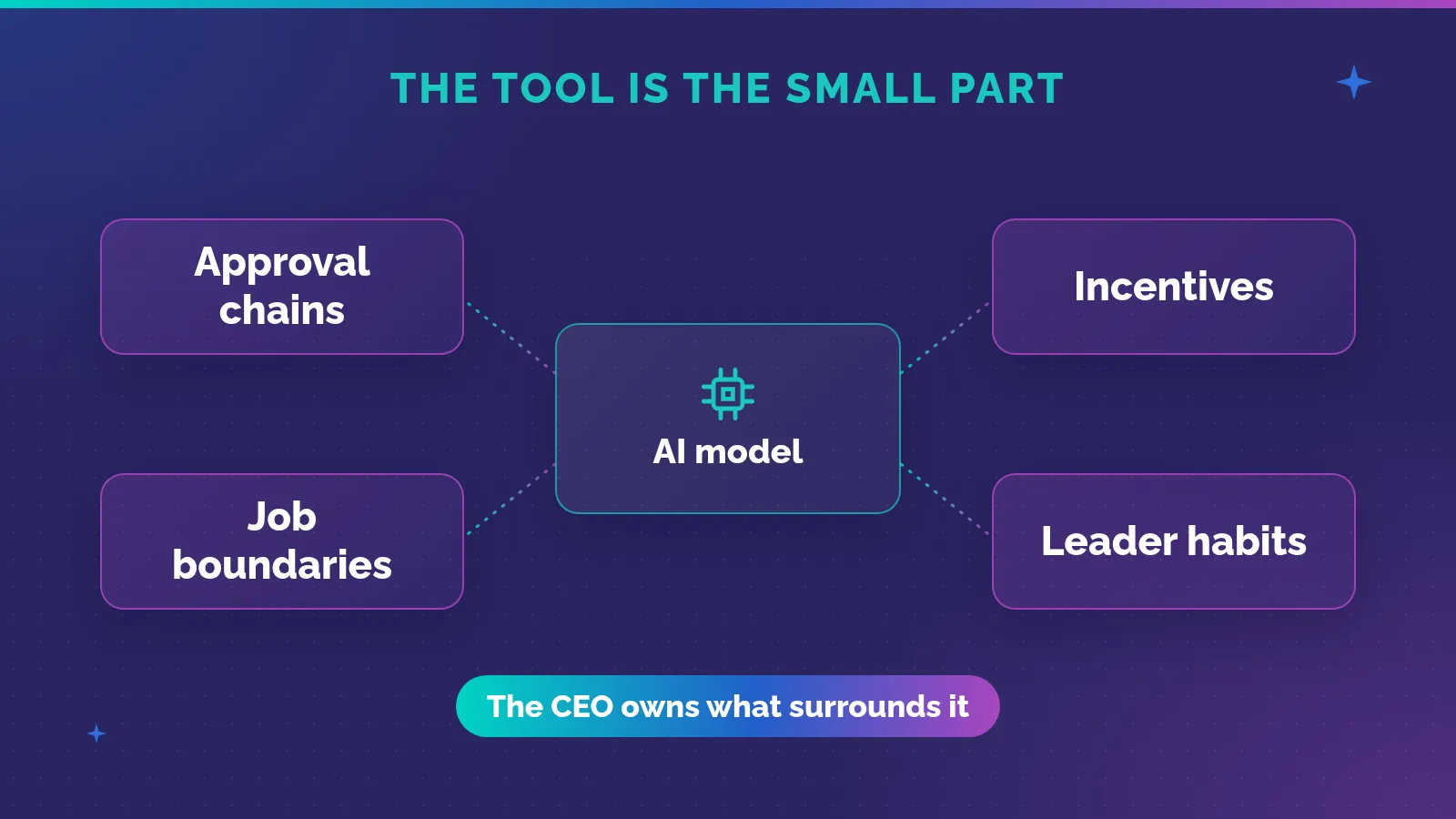
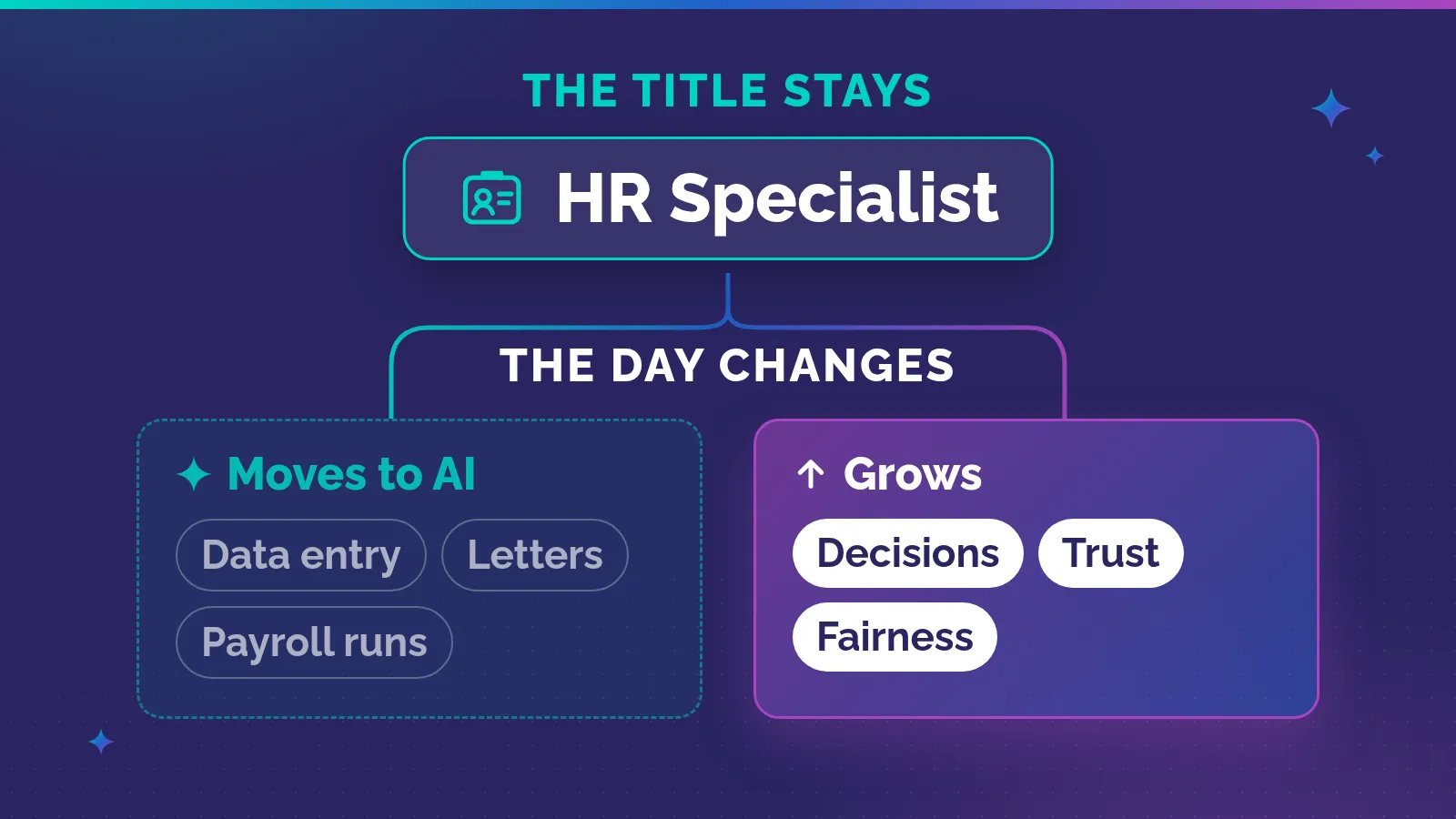
If you want to see how your team’s roles change at each stage, I wrote about that in Which HR Jobs Become Judgment Jobs When AI Does the Work? And who signs off on moving from one stage to the next is a leadership call, not an IT one. That’s the point of AI Transformation Leadership: What the CEO Has to Own.
If you’ve started and you’re stuck at a particular stage, drop me a message. I’d like to know where.
Frequently asked questions
What’s the first HR task to hand to an AI agent?
In HR automation with AI, start with documents and records: salary certificates, experience letters, personal data updates and contract filing. The result is clear, a mistake is easy to spot and fix, and anyone on the team can judge the output. That’s what builds the team’s trust in the agent before it touches any work that affects employees directly.
Is first-pass CV screening a good place to start?
Yes, but it belongs to stage two, not stage one, because it’s a routine task that needs checking. The condition is that a person reviews the result before it’s used, especially early on. The final candidate shortlist is a stage three recommendation, and the final hiring decision stays with people, however good the screening gets.
How long does each stage take?
There’s no fixed number, and I’d advise against tying the move to a date. You move when the team asks for more, when you know the error rate from a real sample, when every task has one named owner, and when you know how to stop the agent fast if it goes wrong. Some teams get there quickly. Others need longer.
Are there HR decisions that should never go to agents?
Yes. Terminations, disciplinary cases, final hiring decisions and difficult personal situations stay with people. The agent can gather the facts and put the file in order, but a person decides and talks to the employee directly. That’s stage four, and there’s no stage after it, however well the agent performs in the earlier ones.
How is this order different from the four levels in the pillar guide?
The four levels answer one question: who decides on each piece of work? This order answers another: where do you start, and what comes next? Both go from the easiest to check to the hardest. Use the levels to sort your HR work, and use the order to choose what you start this month and what follows.
References
- IBM Institute for Business Value, Designing the Thinking Organization: 2026 CHRO Study (PDF), September 2026 (p. 1 and p. 48: 1,500 CHROs and senior executives in 21 geographies and 8,800 employees, April to June 2026; p. 17: only 26% clearly define work as human-led, AI-assisted or AI-executed; p. 19: 62% rising confidence where judgment is built into work, 57% declining where it isn’t; p. 34: 80% of executives say AI adoption creates unrecognized work; p. 41: 72% make limited or no use of AI inside HR; p. 42, Figure 5: 16% no AI use, 26% out of the box features, 30% pilots, 22% scaled, 6% AI-native. Page numbers are the printed ones; add 2 for the PDF page).
- McKinsey & Company, QuantumBlack, The state of AI in 2025: Agents, innovation, and transformation (PDF), November 2025 (p. 5: 23% scaling an agentic AI system somewhere, 39% experimenting with agents; p. 17, Exhibit 12: scaling agents in HR, 14% of AI high performers and 3% of all others; 1,993 participants).
- McKinsey & Company, Superagency in the workplace: Empowering people to unlock AI’s full potential (PDF), January 2025 (p. 4: findings pertain to US workplaces; p. 21, Exhibit 8: 51% cybersecurity and 50% inaccuracy among US employees’ gen AI concerns, n = 3,002).
- PwC, 29th Global CEO Survey: Leading through uncertainty in the age of AI (PDF), January 2026 (p. 5: 56% saw neither higher revenues nor lower costs from AI in the last 12 months, 12% saw both; p. 23: 4,454 CEOs in 95 countries and territories).
- World Economic Forum, The Future of Jobs Report 2025 (PDF), January 2025 (p. 69, Middle East and Northern Africa section, Saudi Arabia: work tasks mainly delivered autonomously by technology projected to reach 45% by 2030, above global averages; over 70% identify technological literacy as a skill on the rise).