Last updated: October 27, 2026
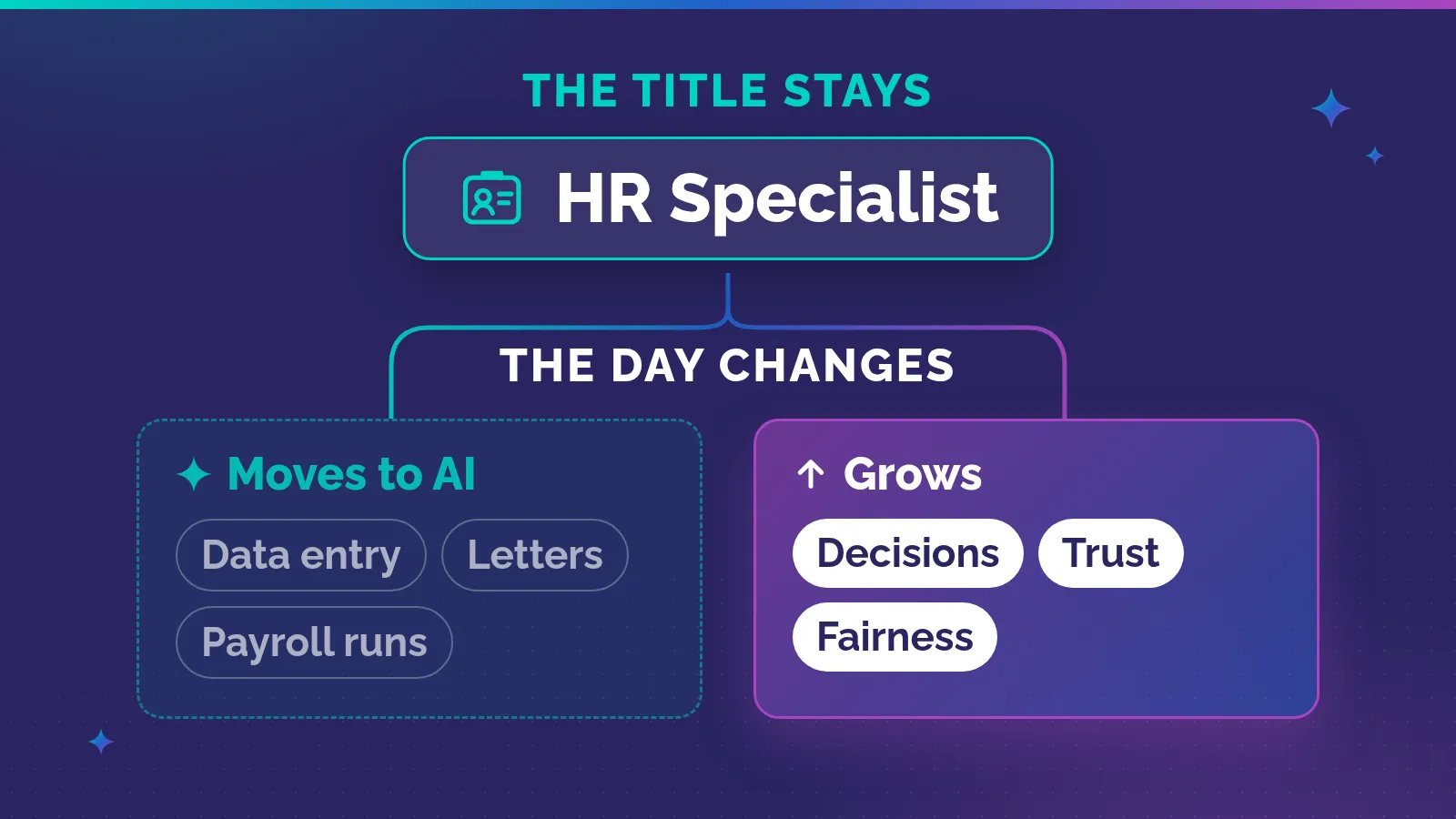
Yes, HR has a future, but the day won’t look like the one we know. The title stays and the day changes. Routine work (data entry, standard letters, routine questions, payroll calculations) moves to AI. Judgment work (the hard decision, trust, fairness) grows. If you’re entering HR now, you need data, judgment and people skills, not just knowledge of procedures.
If you’re choosing a major, starting your first HR job, or you’re a parent asking your son or daughter “why HR?”, this post is for you. The question in your head is simple: am I putting my years into a field AI is about to take?
I’ve worked in HR since 2007, when I started as a developer building payroll systems. I founded Solvait in 2010, and we started with payroll software. Today it’s an agentic AI HR company. So I see HR work from the inside every day, and I see what’s changing in it. My straight answer: HR is worth it, as long as you learn it differently.
Does HR really have a future?
Yes. Every organization with employees needs someone to choose people, pay them fairly, look after them when life gets hard, and settle disputes when they happen. That doesn’t stop because AI has arrived.
But notice the difference between the title and the day. The title “HR specialist” will most likely stay. What changes is what that specialist does from morning to evening.
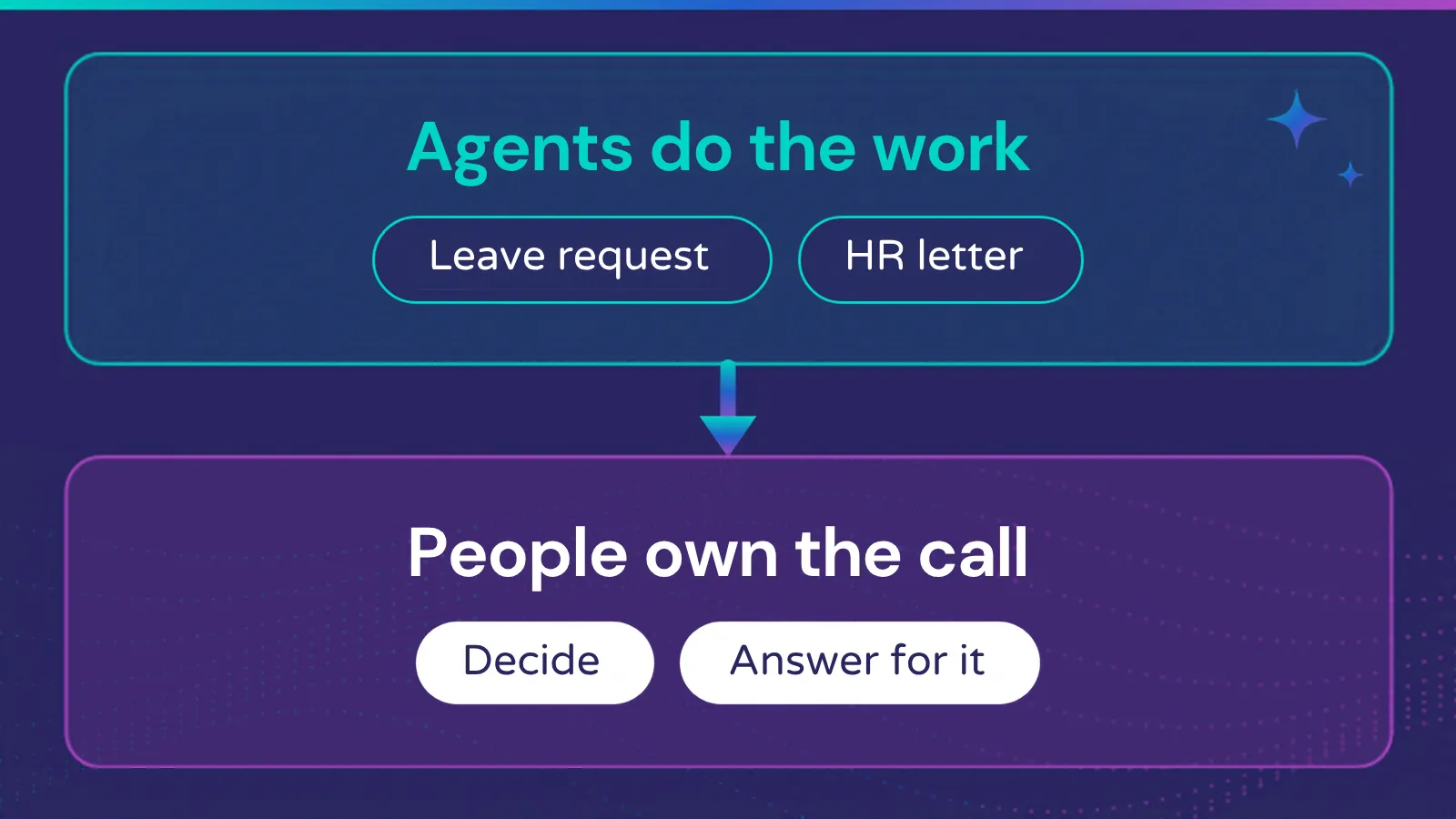
For years, most of an HR person’s day was routine work: entering data, issuing letters, answering the same question twenty times, preparing the monthly report. The important decisions were squeezed into whatever time was left. AI flips that order.
What will AI take from HR work?
The part that follows a known pattern. If the work is done the same way every time, and the data and policy settle it, AI can do it first. For example:
- Entering data and updating employee records.
- Standard letters, like an experience certificate.
- Answering questions like “how do I update my bank details?”
- The first screening of CVs and scheduling interviews.
- Monthly payroll calculations and their first check.
That isn’t just my view. In the World Economic Forum’s employer survey, “Accounting, Bookkeeping and Payroll Clerks” is among the fastest-declining jobs to 2030 (World Economic Forum, Future of Jobs Report 2025, Figure 2.2). Notice the word: clerks. What’s declining is the routine desk work, not the person who understands people and the rules.
So if your study plan or your first job is built entirely on that kind of work, you’re building on the part that’s leaving.
What will grow in HR work?
Judgment work. When AI does the routine work, what’s left for the person is the checking, the hard cases, the conversations and the responsibility. Your title may not change at all. Your hours will: more of them go to deciding.
I explained this idea in detail, role by role, in Which HR jobs become judgment jobs when AI does the work?. Here I’m looking at it from the side of someone at the start of the road.
And the good news if you’re entering the field: the part that’s growing is the harder and more valuable part. Explaining to an employee, face to face, why their request was turned down. Deciding whether an exception is fair. Giving a manager your honest view. Nobody learns these from a procedures manual, and AI can’t be held responsible for them.
Is HR in demand in Saudi Arabia?
I’ll be honest: I couldn’t find an official published number that measures demand for HR graduates specifically in Saudi Arabia. So I won’t give you one. But there are clear signals about the kind of person who will be in demand.
A degree alone isn’t enough anymore. In the World Economic Forum’s survey, 38% of companies operating in Saudi Arabia expect to remove degree requirements to find the talent they need, compared with 19% globally. And over 70% of them see technological literacy as a skill on the rise (World Economic Forum, Future of Jobs Report 2025, p. 69). The message for students: what you can do will matter more than the name on the certificate.
The country wants everyone to know the basics of AI, not just specialists. Saudi Arabia’s National Strategy for Data and AI targets about 40% of the workforce trained in basic data and AI literacy by 2030 (SDAIA). HR people are part of that workforce.
The Ministry of Human Resources itself is moving. Through the Digital Sector Skills Council, and with government and private-sector partners, the ministry launched an “AI Center of Excellence” initiative at LEAP 2026 in Riyadh, to speed up AI adoption among workers and build the skills future jobs need (Ministry of Human Resources and Social Development).
Put those signals together. The market won’t be looking for “an HR graduate” alone. It will look for someone who understands people, knows the rules, and works with AI and checks it. That’s what I mean when I say HR is worth it, as long as you learn it differently.
Which HR skills should you build, starting now?
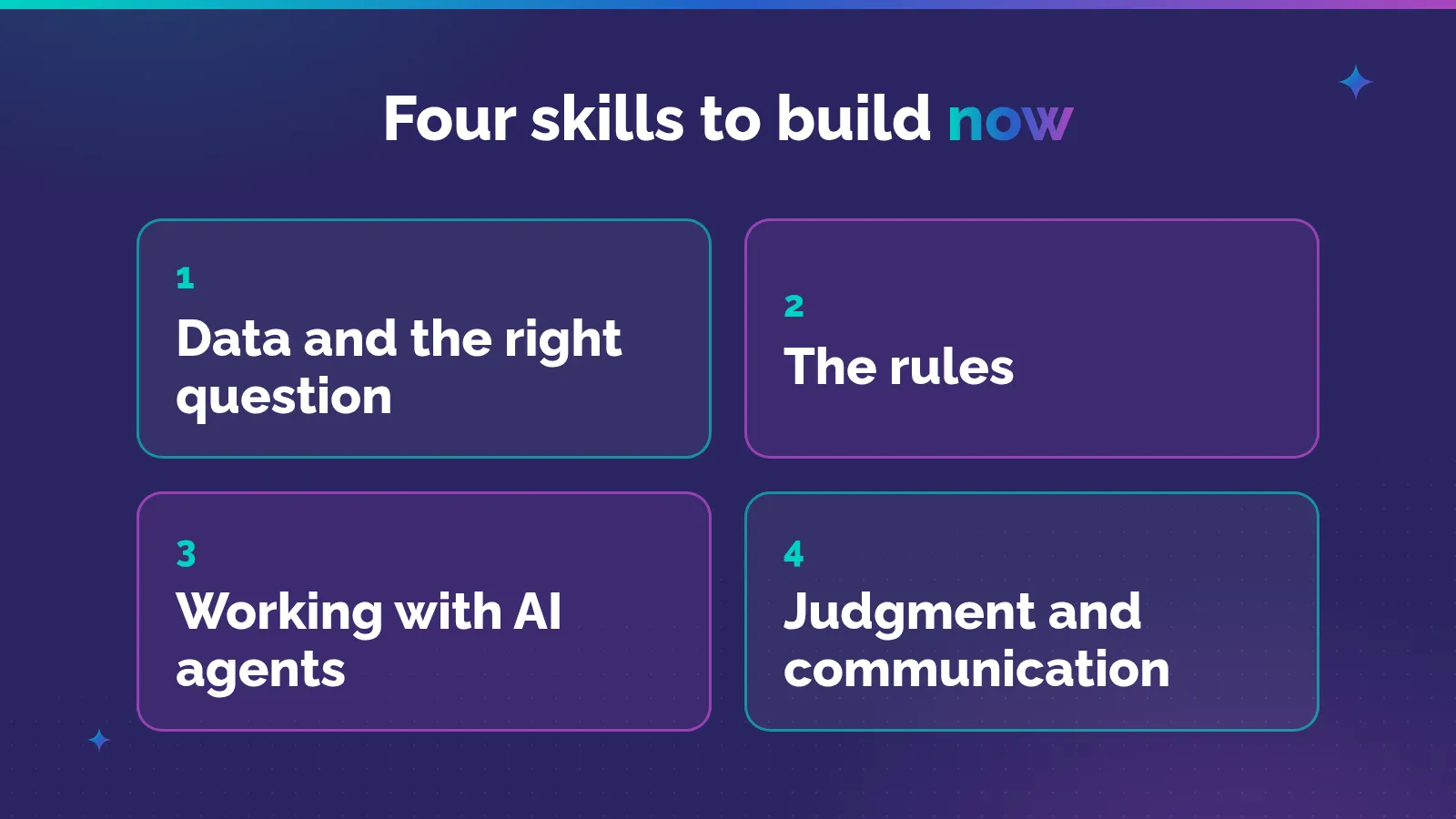
Globally, employers say that if the world’s workforce were 100 people, 59 would need training by 2030. AI and big data top their list of fastest-growing skills, followed by networks and cybersecurity and technological literacy. Creative thinking, resilience and flexibility, and curiosity and lifelong learning are rising too (World Economic Forum, p. 6). In HR terms, that’s four skills:
Reading data and asking the right question
You don’t need to be a data scientist. But you do need to open an attrition or payroll report, understand what it’s saying, and ask: why did five people leave the same team this quarter? AI gives you the numbers in seconds. The good question is still yours.
Knowing the rules: labor law, wage protection, social insurance
When AI prepares the draft, who knows whether it’s right? You do. And you’ll only know if you understand the rules of the Saudi labor market. This knowledge isn’t just for memorizing anymore. It’s your tool for checking AI’s work and catching its mistakes.
Working with AI agents and checking their output
Agentic AI doesn’t just write for you. It does the work: checks the balance, applies the policy, updates the system. Your role is to know what to ask it for, check what it did, and step in when it’s wrong. Learn this early, and use AI tools on real HR tasks, not just for fun. If you want to understand what goes to agents and what stays with people, read agentic AI in HR.
Judgment, fairness and communication
Knowing when the policy gives the wrong answer for this person. Sitting with an employee and explaining a decision they don’t like. Writing clearly in Arabic and English. And standing behind your decision when someone pushes back. These come only from practice, so start early.
Advice for those choosing HR today, and for those just starting in it
If you’re choosing the major:
- Study HR, and add a course in statistics or data analysis. That mix is rare and in demand.
- Use AI tools in your university projects on real tasks: a job description, a leave policy, an analysis of made-up employee data. Then check what it produced and find its mistakes.
- Look for an internship in an HR department that uses modern systems. You’ll learn more in three months than in a year of memorizing.
- Learn the basics of Saudi labor law early. You’ll need them to check AI’s work, not just to pass an exam.
If you’ve just started working in HR:
- For one week, keep a short note at the end of each day: what did you do by following a rule, and where did you make a call? You’ll see how much of your day is routine.
- Volunteer to own the first piece of work AI does in your team. Whoever owns that work today becomes the go-to person tomorrow.
- Learn to check, not to accept. If AI’s output looks neat, that doesn’t mean it’s right.
And for parents: don’t just ask “is the major in demand?” Ask: “Will my son or daughter learn to work with AI, read data and deal with people?” If the answer is yes, HR is a good choice.
When I hire at Solvait, this is the question I ask: can this person check AI’s work and make the call?
This idea, that AI does the work and people govern, is at the heart of the book I’m writing on the AI-native organization.
I also wrote about the pressure HR departments face today in how AI is rewriting the HR role in Saudi Arabia.
If you want one idea and one honest note from building this every month, subscribe to The AI HR Newsletter.
Frequently asked questions
Does HR have a future?
Yes. Every organization with employees needs someone to choose people, pay them fairly and look after them. But the HR day is changing: routine work moves to AI and judgment work grows. The title stays, and the skills it needs change.
Is HR in demand in Saudi Arabia?
There’s no official published number that measures demand for HR graduates specifically. But the signals are clear: 38% of companies operating in Saudi Arabia expect to remove degree requirements to find talent, compared with 19% globally, and over 70% see technological literacy as a rising skill, according to the World Economic Forum. So the demand is for graduates who combine an understanding of people and the rules with working with AI, not for the degree alone.
Will AI take people’s jobs?
It will remove some jobs and create others. Employers in the World Economic Forum’s survey expect 170 million jobs to be created and 92 million to be displaced by 2030, a net gain of 78 million, from all the changes they foresee, technology included. The jobs shrinking fastest are routine desk jobs, such as “Accounting, Bookkeeping and Payroll Clerks”. Work that needs a decision, trust and someone to own the result stays with people.
I’m new in HR. Is my job at risk?
The part of your job that is routine is at risk: data entry, standard letters, repeated questions and the calculation side of payroll. The rest is not. If you move your day toward checking, deciding and talking to people, you become more useful, not less. For the role-by-role view, read which HR jobs become judgment jobs.
What is the future of HR in Saudi Arabia?
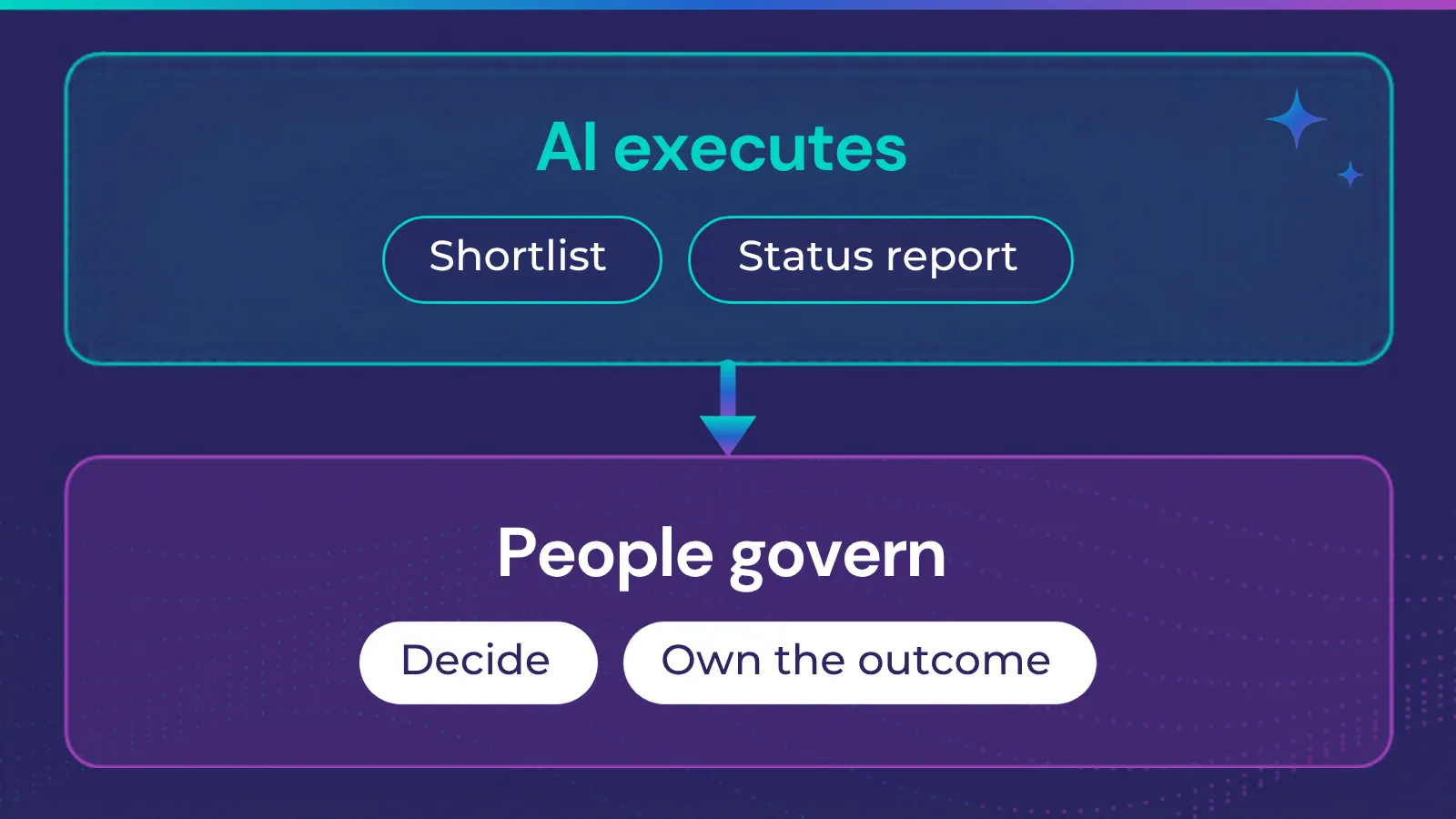
More AI, and more judgment. Saudi Arabia’s National Strategy for Data and AI targets about 40% of the workforce trained in basic data and AI literacy by 2030, and the Ministry of Human Resources launched an AI Center of Excellence initiative at LEAP 2026. HR professionals who work with AI and check it will be in a strong position. In short: AI executes, people govern.
References
- World Economic Forum, The Future of Jobs Report 2025 (PDF), January 2025 (p. 5: 170 million jobs created and 92 million displaced by 2030, net 78 million; p. 6: 59 of every 100 workers need training by 2030, AI and big data the fastest-growing skills, followed by networks and cybersecurity and technological literacy, with creative thinking, resilience and flexibility, and curiosity and lifelong learning also rising; p. 19, Figure 2.2: Accounting, Bookkeeping and Payroll Clerks among the fastest-declining jobs; p. 69: Saudi Arabia, 38% of companies expect to remove degree requirements vs 19% globally, over 70% see technological literacy as rising)
- Saudi Data and AI Authority (SDAIA), National Strategy for Data and Artificial Intelligence: Performance (PDF), November 2025, and the National Strategy for Data and AI (2020, PDF), p. 27 (target of about 40% of the workforce trained in basic data and AI literacy by 2030)
- Ministry of Human Resources and Social Development, Launch of the “AI Center of Excellence” Initiative During LEAP 2026, 2026